Drain Field Repair in Bigfork, MT
Soggy yard, standing water or odors over the lines? We diagnose the real cause and give you a straight repair-or-replace answer.
Drain Field in Bigfork
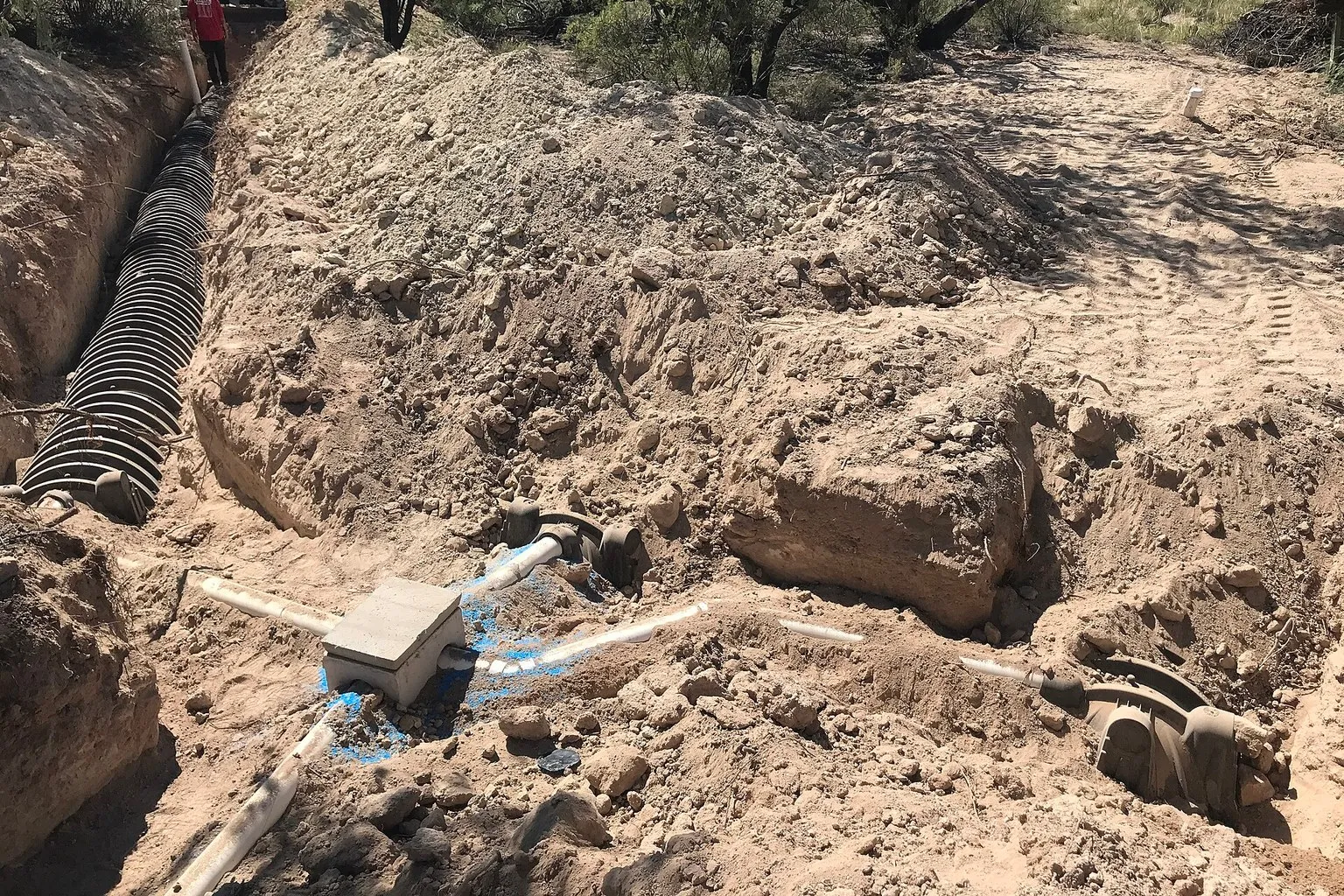
Drain field repair starts with an honest diagnosis, not a tear-out. The drain field, also called the leach field or field lines, is where treated water from the tank soaks back into the ground, and it is both the most important and the most expensive part of a septic system. When a field fails you see it in the yard: spongy or standing water over the lines, lush green strips of grass, sewage odor outside, slow drains in the house, and eventually backups. We diagnose and repair drain fields across the Flathead Valley, and the valley’s ground is the story. On the floor near the Flathead River, Ashley Creek and the lakeshores, groundwater sits close to the surface and a field has little dry soil to work with, especially during spring runoff. In the cobbly glacial gravel, water can move too fast; in the clay and silt pockets, too slow. Add a tank that overflowed solids into the lines, a frozen or crushed pipe, or a failed pump, and a lot of "dead field" calls turn out to be something fixable upstream. We find the real cause, and where the field itself has failed we repair, rebuild or replace it under the county permit, so the repair-versus-replace call is an honest one.
Septic service in Bigfork
Bigfork sits where the Swan River empties into the northeast corner of Flathead Lake, about twenty minutes southeast of Kalispell, a resort village with a lot of lakeshore, a lot of second homes, and almost no sewer outside the village core. The homes along the lake at Woods Bay and down the east shore, the places up Swan Hill and along the Swan River, Eagle Bend and the golf-course neighborhoods, the ground north toward Creston and east toward Ferndale: nearly all of it runs on septic. Bigfork septic is lake septic. Flathead Lake water quality is watched closely, and aging shoreline systems are the first thing a buyer’s agent asks about. Lake lots here are often steep, stepping down from the road to the water, so the drain field sits above the house and an effluent pump does the lifting, and when that pump fails at a summer home in February nobody is there to hear the alarm. The soils run from cobbly glacial gravel on the benches to shallow, rocky ground along the shore where there was never much room for a field in the first place. Add a short-term rental market that fills a house every summer weekend, and you have systems that need an honest eye and a pumping schedule built around how the house is actually used. We pump, repair, inspect and install septic systems all over the Bigfork area. Tell us where the property is and what is going on and we will give you a straight answer.
- Diagnosis of standing water, odors and soggy ground
- Tank, pump and line problems ruled out before condemning a field
- Crushed, frozen, clogged and root-invaded lines repaired or replaced
- Distribution box checked and rebuilt for even flow
- Honest call on repair versus rebuild; no needless tear-outs
- Field replacements permitted through Flathead County Environmental Health
Need drain field elsewhere? See all of our Bigfork services or drain field across the Flathead Valley.
Drain Field in Bigfork
Tell us what’s happening and we’ll call you back. Local Bigfork service.
Areas We Cover in Bigfork
In town, on the lake, or up a gravel road: if it’s in or around Bigfork, we come to your property.
- Woods Bay
- Swan Hill
- Eagle Bend
- East Shore
- Swan River Road
Common Septic Issues in Bigfork
The septic problems we see most around here, and how we handle them.
Shoreline systems and lake water quality
Many Bigfork and Woods Bay cabins carry septic systems set decades ago, close to the water and small for the year-round homes they have become. Flathead Lake water quality is a real local concern, and these systems get a hard look at sale time. We inspect them honestly and tell you what a replacement would involve under today’s rules.
Pump systems on steep lake lots
Lots that step down from the road to the lake put the drain field above the house, so a pump lifts effluent uphill. Pumps and floats wear out, and a failure at an empty summer home can go unnoticed for weeks. We test and replace pumps and floats and set alarms so somebody actually hears them.
Summer rentals and second homes
A Bigfork house can sit empty all winter and then host a full family every weekend from June to Labor Day. That pattern fills a tank fast and is easy to neglect. We set pumping to the season and check the system before the first guests arrive.
Drain Field in Bigfork: FAQs
Do you cover Bigfork and the east shore?
I am buying a lake home in Bigfork. Is the septic inspection really necessary?
We are only in Bigfork in summer. How do we protect the system?
There is standing water and a smell in my yard. Is my drain field dead?
Can a failing drain field be saved, or does it have to be replaced?
Does a drain field replacement need a permit in Flathead County?
How do I keep my drain field from failing?
Need Drain Field in Bigfork?
Call or text for a fast quote. We come to your property, and backups, frozen systems and emergencies get priority.