New Septic System Installation in Columbia Falls, MT
Building on a lot outside the sewer line, or replacing a worn-out system? We handle the county permit, the site evaluation and the install.
New Systems in Columbia Falls
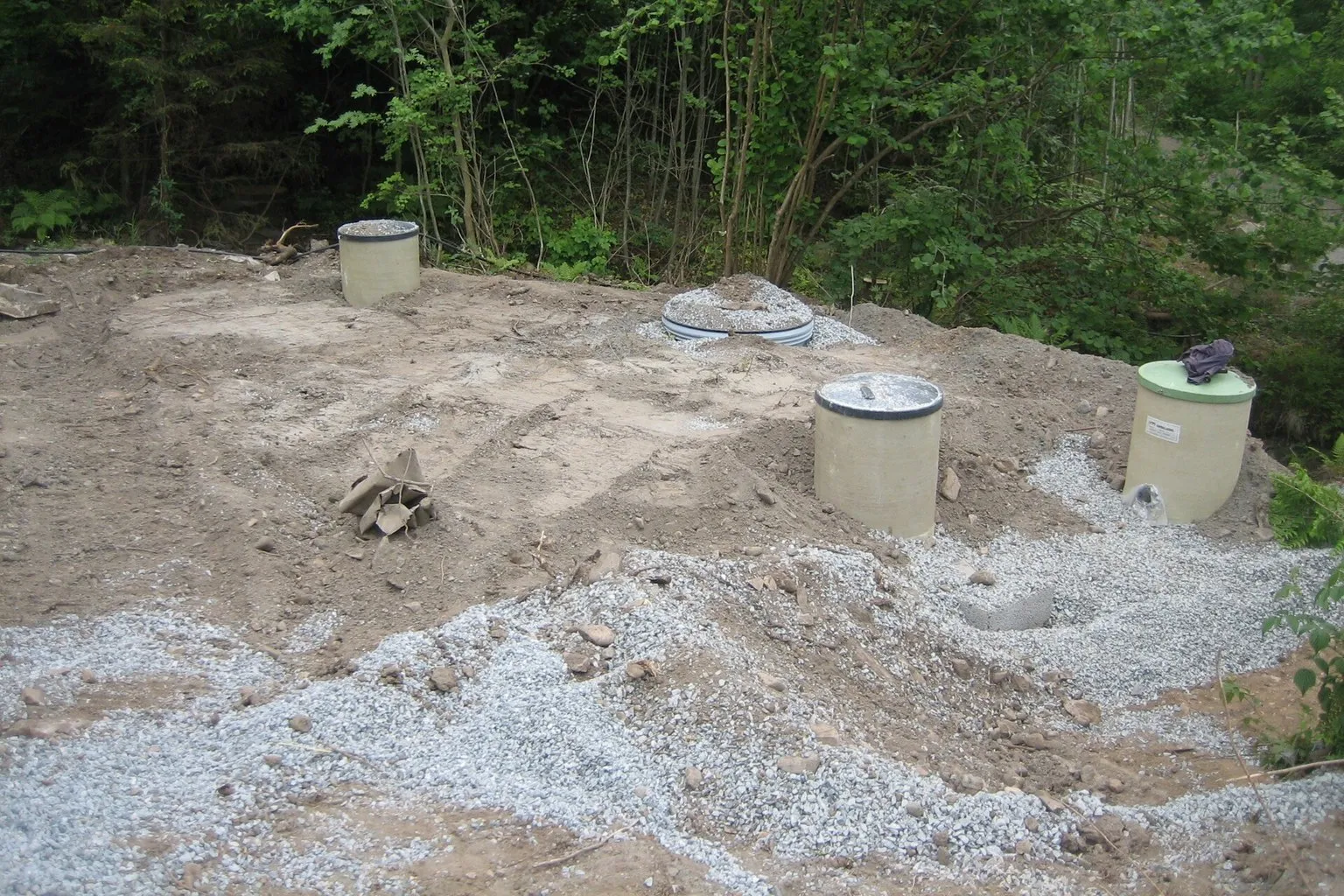
Most new homes in the Flathead Valley go up outside a sewer district, which means a new septic system is part of the build. We install complete residential septic systems across the valley: the tank, the lines, the drain field or whichever treatment system the ground calls for, and the Flathead County permit that has to come first. New construction here follows Montana DEQ rules through Flathead County Environmental Health, and the design depends on a site evaluation of your lot’s soil and groundwater. On a cobbly bench above the valley a conventional gravity system may be fine; on a lakeshore lot, a river bottom near Evergreen, or a parcel with shallow groundwater, the county may require a pressure-dosed, elevated sand mound or other engineered system, and the price and the layout change with it. We walk the lot with you before you commit, tell you what the ground will likely allow, handle the application and the inspections, and build a system sized for the house you are actually building, not the one the old permit described. We also replace systems that are past saving, on the same permit path.
Septic service in Columbia Falls
Columbia Falls sits where the Flathead River comes out of Bad Rock Canyon, the last real town before Glacier National Park and the gateway for everyone heading up Highway 2 to West Glacier. The town itself has city sewer, but Columbia Falls has grown well past its sewer lines since 2020: the homes and small acreages toward Columbia Heights and up the North Fork Road, the Meadow Lake area, the river benches south of town toward the Highway 206 corridor, and the places up toward Hungry Horse and Coram all run on septic. This is river and canyon ground. Close to the Flathead the soil is river gravel and cobble with groundwater near the surface in spring; up on the benches it is deeper and better drained; toward the canyon mouth the lots get steep and rocky and a system has to be fitted to whatever flat ground there is. Columbia Falls also carries a lot of the valley’s working families and a growing number of vacation rentals catering to park traffic, so we see both: older family systems that have never had a service record, and newer rentals that need pumping on a tourist-season schedule. We pump, repair, inspect and install septic systems throughout the Columbia Falls area. Tell us where you are and what the system is doing and we will give you an honest answer and a price before we start.
- Flathead County Environmental Health permit application and inspections handled
- Site evaluation coordinated: soil, groundwater and setbacks read before design
- Conventional gravity, pressure-dosed and sand mound systems installed to the approved design
- Tank, lines, drain field and controls set and insulated for the frost depth
- Replacement systems for homes whose old field is past saving
- Final cover, risers at grade and an as-built record for the day you sell
Need new systems elsewhere? See all of our Columbia Falls services or new systems across the Flathead Valley.
New Systems in Columbia Falls
Tell us what’s happening and we’ll call you back. Local Columbia Falls service.
Areas We Cover in Columbia Falls
In town, on the lake, or up a gravel road: if it’s in or around Columbia Falls, we come to your property.
- Columbia Heights
- North Fork Road
- Meadow Lake
- Highway 206 corridor
- Bad Rock Canyon
Common Septic Issues in Columbia Falls
The septic problems we see most around here, and how we handle them.
Growth past the sewer line
Columbia Falls has added a lot of homes beyond the city sewer in a few short years, each on a permitted septic system that the new owners may never have thought about. We locate and pump new systems, mark the lid, and explain what a tank on a river-gravel lot needs to last.
River gravel and spring groundwater
Lots near the Flathead sit on cobble and gravel with groundwater that rises every spring. Water moves through that ground fast when it is dry and has nowhere to go when the river is up. A tank pumped on schedule and runoff kept off the field are what protect a drain field working in that soil.
Park-season rentals
Columbia Falls rentals fill with Glacier visitors from June through September and sit quiet in the shoulder months. That summer load fills a tank fast. We set pumping for the season, usually a spring pump before the guests arrive, and check the system before the first booking.
New Systems in Columbia Falls: FAQs
Do you cover Columbia Falls and up toward the park?
I rent my Columbia Falls place to Glacier visitors. When should I pump?
My lot is near the river. Does that change anything?
Do I need a permit for a new septic system in Flathead County?
How long does a new system take?
Will my lot need a sand mound or an engineered system?
Can you replace a system that has failed?
Also Serving Near Columbia Falls
Need New Systems in Columbia Falls?
Call or text for a fast quote. We come to your property, and backups, frozen systems and emergencies get priority.