New Septic System Installation in Kila, MT
Building on a lot outside the sewer line, or replacing a worn-out system? We handle the county permit, the site evaluation and the install.
New Systems in Kila
Most new homes in the Flathead Valley go up outside a sewer district, which means a new septic system is part of the build. We install complete residential septic systems across the valley: the tank, the lines, the drain field or whichever treatment system the ground calls for, and the Flathead County permit that has to come first. New construction here follows Montana DEQ rules through Flathead County Environmental Health, and the design depends on a site evaluation of your lot’s soil and groundwater. On a cobbly bench above the valley a conventional gravity system may be fine; on a lakeshore lot, a river bottom near Evergreen, or a parcel with shallow groundwater, the county may require a pressure-dosed, elevated sand mound or other engineered system, and the price and the layout change with it. We walk the lot with you before you commit, tell you what the ground will likely allow, handle the application and the inspections, and build a system sized for the house you are actually building, not the one the old permit described. We also replace systems that are past saving, on the same permit path.
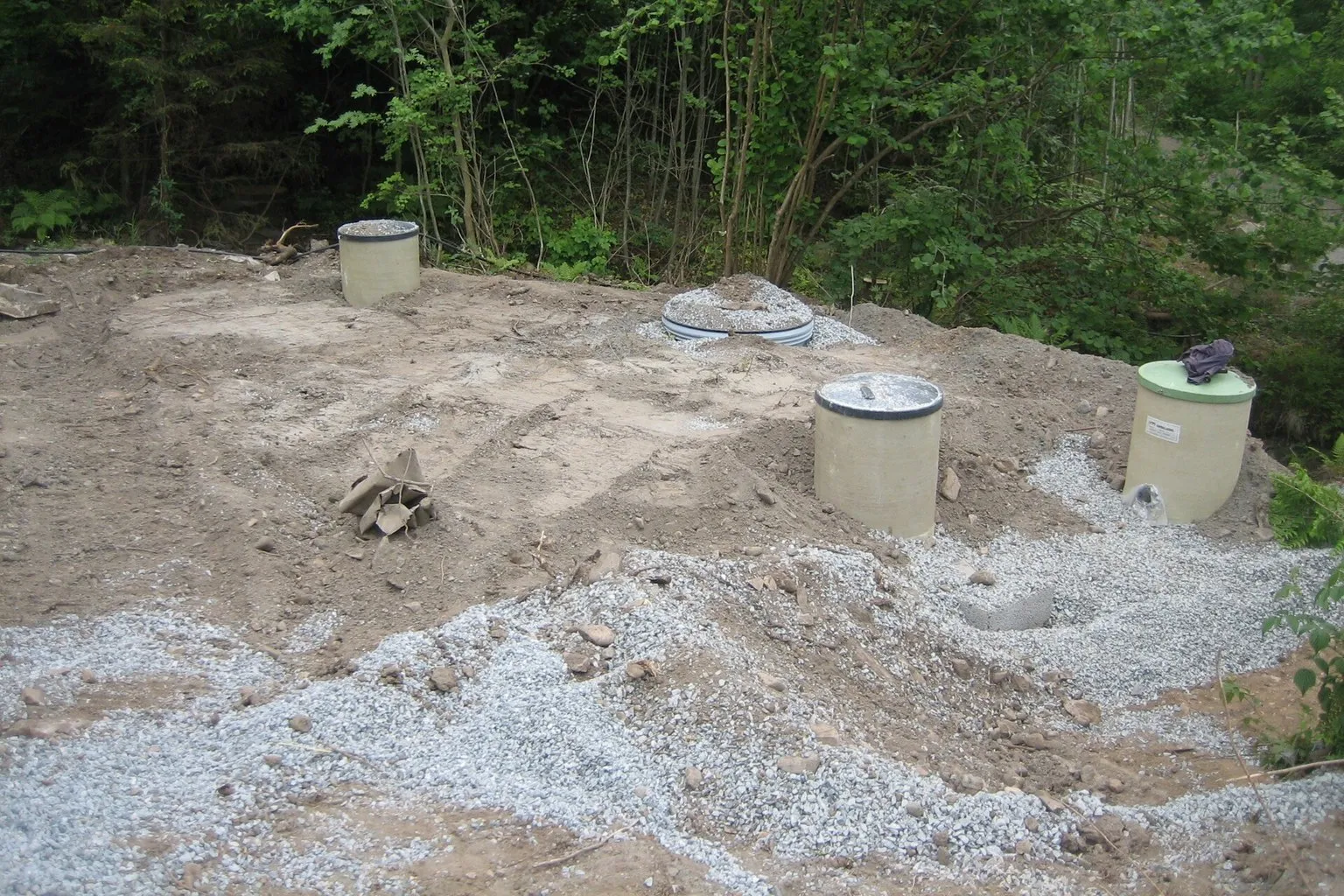
Septic service in Kila
Kila is the rural community west of Kalispell along Highway 2, where the valley floor gives way to timbered hills, small lakes and the ranch and acreage country that runs out toward Marion. There is no sewer here. Every home in Kila, from the older ranch places and the cabins around Smith Lake and the Ashley Creek bottoms to the newer houses on twenty-acre parcels up in the trees, runs on its own well and its own septic system. Kila septic is country septic with two kinds of ground. Down low, around Smith Lake and along Ashley Creek, the soil is wet and the water table sits high every spring, and a drain field has little dry soil to work with. Up in the hills, the ground is rocky and timbered, lots are big, and the tank can be a long way from the driveway, often with no record of where it was put. Winters are real out here: frost goes deep, lines freeze, and the last half mile to the house may be a gravel road under snow. We pump, repair, inspect and install septic systems across Kila and the west valley, and we come prepared for the access. Tell us where the property is and what the system is doing and we will give you a straight answer and a price up front.
- Flathead County Environmental Health permit application and inspections handled
- Site evaluation coordinated: soil, groundwater and setbacks read before design
- Conventional gravity, pressure-dosed and sand mound systems installed to the approved design
- Tank, lines, drain field and controls set and insulated for the frost depth
- Replacement systems for homes whose old field is past saving
- Final cover, risers at grade and an as-built record for the day you sell
Need new systems elsewhere? See all of our Kila services or new systems across the Flathead Valley.
New Systems in Kila
Tell us what’s happening and we’ll call you back. Local Kila service.
Areas We Cover in Kila
In town, on the lake, or up a gravel road: if it’s in or around Kila, we come to your property.
- Smith Lake
- Ashley Creek
- Highway 2 West
- Kila Hills
- Browns Meadow Road
Common Septic Issues in Kila
The septic problems we see most around here, and how we handle them.
Wet ground around Smith Lake and the creek
The low ground near Smith Lake and Ashley Creek carries a high water table every spring, and a drain field there is working in saturated soil for weeks. Pumping on schedule so solids never reach the field, and routing snowmelt away from it, are what keep a wet-ground field alive.
Big timbered lots and unmarked tanks
On the acreages up in the hills the tank may be a hundred feet from the house under years of pine needles, with no record of where it was set. We locate it from the plumbing and the layout, dig to the lid, and add a riser so the next service does not need a shovel.
Long driveways, deep snow, deep frost
Kila winters freeze shallow lines and bury lids under drifts, and the road in may be gravel. We pump and repair year-round, and we can check the vulnerable spots on your system before the cold sets in so a January backup does not happen.
New Systems in Kila: FAQs
Do you really come out to Kila?
There are no records for my Kila property. Can you find the tank?
My ground near Smith Lake is wet every spring. Is my system in trouble?
Do I need a permit for a new septic system in Flathead County?
How long does a new system take?
Will my lot need a sand mound or an engineered system?
Can you replace a system that has failed?
Need New Systems in Kila?
Call or text for a fast quote. We come to your property, and backups, frozen systems and emergencies get priority.