Drain Field Repair in Kalispell, MT
Soggy yard, standing water or odors over the lines? We diagnose the real cause and give you a straight repair-or-replace answer.
Drain Field in Kalispell
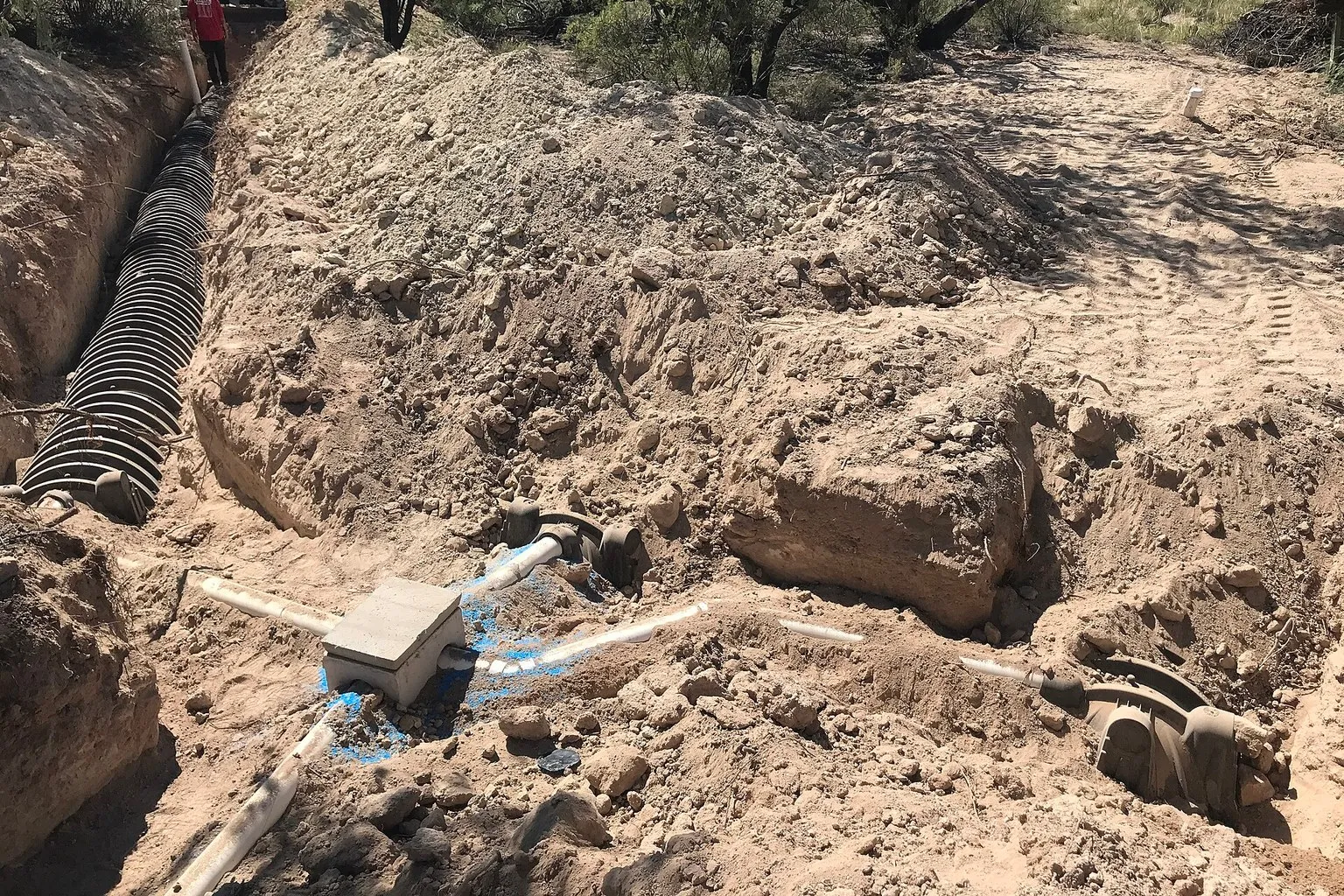
Drain field repair starts with an honest diagnosis, not a tear-out. The drain field, also called the leach field or field lines, is where treated water from the tank soaks back into the ground, and it is both the most important and the most expensive part of a septic system. When a field fails you see it in the yard: spongy or standing water over the lines, lush green strips of grass, sewage odor outside, slow drains in the house, and eventually backups. We diagnose and repair drain fields across the Flathead Valley, and the valley’s ground is the story. On the floor near the Flathead River, Ashley Creek and the lakeshores, groundwater sits close to the surface and a field has little dry soil to work with, especially during spring runoff. In the cobbly glacial gravel, water can move too fast; in the clay and silt pockets, too slow. Add a tank that overflowed solids into the lines, a frozen or crushed pipe, or a failed pump, and a lot of "dead field" calls turn out to be something fixable upstream. We find the real cause, and where the field itself has failed we repair, rebuild or replace it under the county permit, so the repair-versus-replace call is an honest one.
Septic service in Kalispell
Kalispell is the Flathead County seat and the valley’s commercial center, and it is where our trucks are based. The city core along Main Street and the newer commercial stretch up Highway 93 North sit on city sewer, but step outside the city limits and the picture flips: the farms and five-acre parcels of West Valley, the homes around Foys Lake and up Lone Pine, the Lower Valley south toward Somers, the Ashley Creek bottoms and the new subdivisions filling in toward Evergreen and Whitefish Stage all run on septic tanks and drain fields. That is the ground we work every day. Kalispell septic has a few habits of its own. The valley floor is glacial outwash, cobbles and gravel in one yard and a lens of clay in the next, and near Ashley Creek and the Flathead River the groundwater sits close enough to the surface to matter every spring. Frost goes deep, and a shallow line or a bare lid can freeze solid in a January cold snap. And Kalispell has grown fast since 2020, so we see a lot of new builds that needed a permitted system from Flathead County Environmental Health, and a lot of homes changing hands to buyers from out of state who have never owned a tank and want an inspection before closing. We pump, repair, inspect and install septic systems all over the Kalispell area. Tell us roughly where your tank is and what is going on and we will give you a straight answer and a real price.
- Diagnosis of standing water, odors and soggy ground
- Tank, pump and line problems ruled out before condemning a field
- Crushed, frozen, clogged and root-invaded lines repaired or replaced
- Distribution box checked and rebuilt for even flow
- Honest call on repair versus rebuild; no needless tear-outs
- Field replacements permitted through Flathead County Environmental Health
Need drain field elsewhere? See all of our Kalispell services or drain field across the Flathead Valley.
Drain Field in Kalispell
Tell us what’s happening and we’ll call you back. Local Kalispell service.
Areas We Cover in Kalispell
In town, on the lake, or up a gravel road: if it’s in or around Kalispell, we come to your property.
- West Valley
- Lower Valley
- Foys Lake
- Whitefish Stage Road
- Ashley Creek
- Lone Pine
Common Septic Issues in Kalispell
The septic problems we see most around here, and how we handle them.
New homes on the edge of town
Kalispell has pushed out into West Valley and the Lower Valley fast, and most of those new houses sit beyond the sewer line on a permitted septic system. A new system still needs its tank pumped on schedule, and the first owners often do not know where the lid is or how big the tank is. We locate it, note it, and set a realistic interval.
Shallow groundwater near the creek and river bottoms
Along Ashley Creek, the Stillwater and the Flathead River, groundwater rises close to the surface during spring runoff and leaves a drain field with little dry soil to work with. A tank pumped on time, so solids never reach the field, is the best protection a wet-ground field can get.
Buyers from out of state who have never owned a tank
A big share of Kalispell sales now go to buyers coming from city sewer. They need a septic inspection before closing and a plain explanation of what they are buying. We inspect, pump if needed, compare the system to the county record, and put it in writing on the contract timeline.
Drain Field in Kalispell: FAQs
Do you cover all of the Kalispell area?
My Kalispell home is on city water. Could it still be on septic?
I am buying a house outside Kalispell. Who handles the septic inspection?
There is standing water and a smell in my yard. Is my drain field dead?
Can a failing drain field be saved, or does it have to be replaced?
Does a drain field replacement need a permit in Flathead County?
How do I keep my drain field from failing?
Need Drain Field in Kalispell?
Call or text for a fast quote. We come to your property, and backups, frozen systems and emergencies get priority.