Drain Field Repair in Whitefish, MT
Soggy yard, standing water or odors over the lines? We diagnose the real cause and give you a straight repair-or-replace answer.
Drain Field in Whitefish
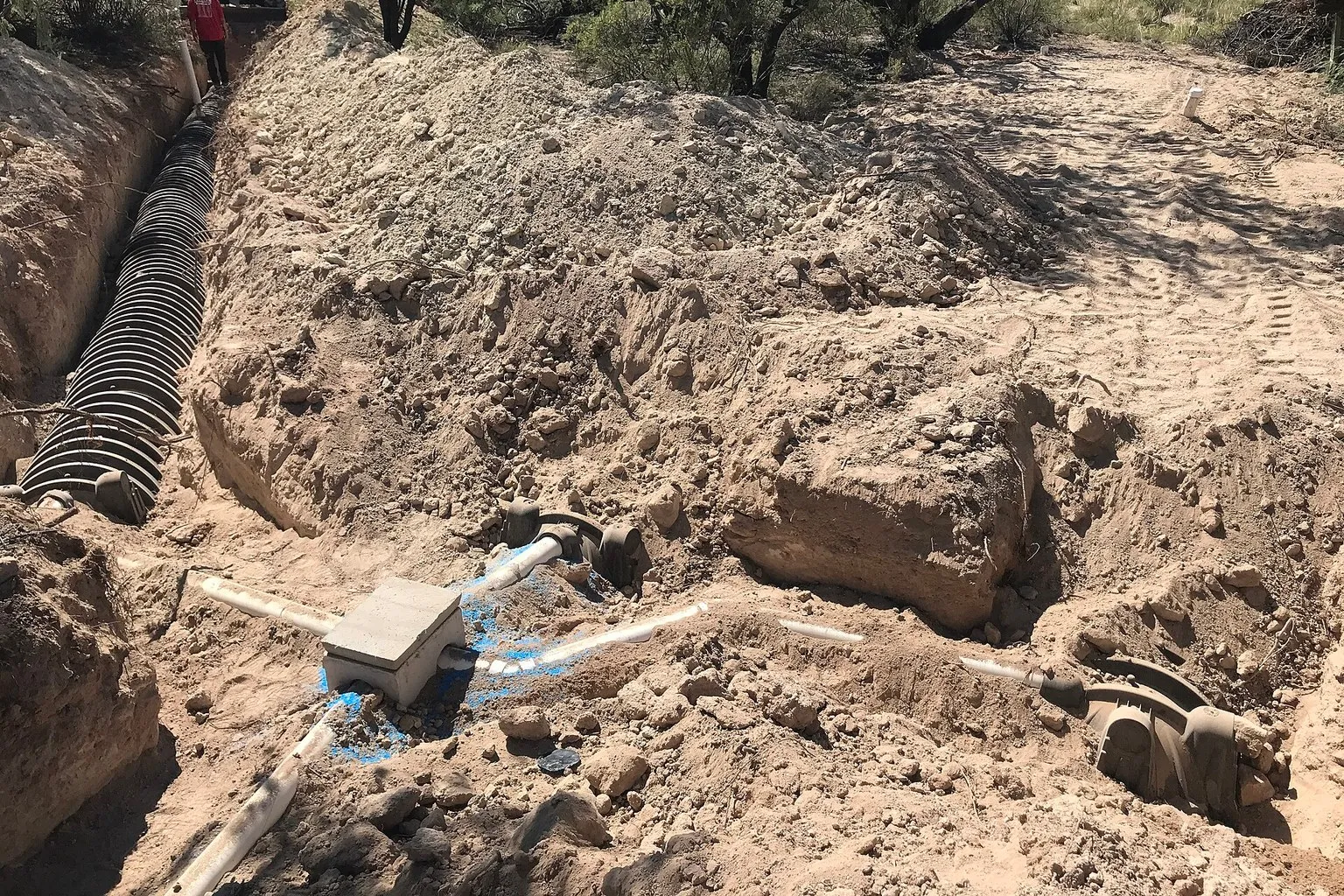
Drain field repair starts with an honest diagnosis, not a tear-out. The drain field, also called the leach field or field lines, is where treated water from the tank soaks back into the ground, and it is both the most important and the most expensive part of a septic system. When a field fails you see it in the yard: spongy or standing water over the lines, lush green strips of grass, sewage odor outside, slow drains in the house, and eventually backups. We diagnose and repair drain fields across the Flathead Valley, and the valley’s ground is the story. On the floor near the Flathead River, Ashley Creek and the lakeshores, groundwater sits close to the surface and a field has little dry soil to work with, especially during spring runoff. In the cobbly glacial gravel, water can move too fast; in the clay and silt pockets, too slow. Add a tank that overflowed solids into the lines, a frozen or crushed pipe, or a failed pump, and a lot of "dead field" calls turn out to be something fixable upstream. We find the real cause, and where the field itself has failed we repair, rebuild or replace it under the county permit, so the repair-versus-replace call is an honest one.
Septic service in Whitefish
Whitefish is the valley’s resort town, sitting at the foot of Whitefish Mountain Resort on the south shore of Whitefish Lake, about fifteen miles north of Kalispell. The downtown and the close-in neighborhoods are on city sewer, but the places people actually buy here, the lakeshore and the west shore along East Lakeshore Drive and Lion Mountain, the homes up Haskill Basin and toward Big Mountain, the properties out toward Blanchard Lake, Twin Bridges and the Highway 93 corridor, mostly run on septic. Whitefish septic is shaped by two things: the lake and the money. Whitefish Lake water quality is a live concern in town, and aging lakeshore systems get looked at hard by buyers, neighbors and the county. Many lake lots are steep, so systems use a pump to lift effluent up to a drain field above the house, and a failed pump at a second home nobody is in can run for weeks before anyone notices. Then there is the use pattern: a lot of Whitefish houses are second homes and short-term rentals that sit empty, then fill with a ski week’s worth of guests, which fills a tank faster than the old pumping rule assumes. We pump, repair, inspect and install septic systems all over the Whitefish area, and we do a lot of pre-closing inspections for buyers coming from out of state. Tell us where the property is and what is going on and we will give you a straight answer.
- Diagnosis of standing water, odors and soggy ground
- Tank, pump and line problems ruled out before condemning a field
- Crushed, frozen, clogged and root-invaded lines repaired or replaced
- Distribution box checked and rebuilt for even flow
- Honest call on repair versus rebuild; no needless tear-outs
- Field replacements permitted through Flathead County Environmental Health
Need drain field elsewhere? See all of our Whitefish services or drain field across the Flathead Valley.
Drain Field in Whitefish
Tell us what’s happening and we’ll call you back. Local Whitefish service.
Areas We Cover in Whitefish
In town, on the lake, or up a gravel road: if it’s in or around Whitefish, we come to your property.
- Whitefish Lake west shore
- Lion Mountain
- Haskill Basin
- Blanchard Lake
- Twin Bridges
- Highway 93 South
Common Septic Issues in Whitefish
The septic problems we see most around here, and how we handle them.
Aging lakeshore systems
Many Whitefish Lake cabins were built decades ago with systems that would not be permitted today, close to the water and sized for a weekend place, not a year-round home. Lake water quality is a real concern here, so we inspect these systems honestly and tell you what the county is likely to require if the field has to be replaced.
Ski-week rentals that fill tanks fast
A Whitefish rental can go from empty to twelve guests for a week and back to empty. That bursty use fills a tank far faster than a normal household, and a rental tank that is overlooked is a backup waiting to happen during someone’s vacation. We set pumping intervals to the booking pattern, not the calendar.
Pump systems at empty second homes
Steep lake and mountain lots put the drain field above the house, so an effluent pump does the lifting. When the pump or a float fails at a second home nobody is in, the alarm can sound to an empty house. We test pumps and floats, set alarms up so a caretaker or your phone hears them, and winterize the vulnerable parts.
Drain Field in Whitefish: FAQs
Do you cover Whitefish and the lake?
I am buying a lakefront home in Whitefish. What should the septic inspection cover?
I rent my Whitefish house out. How often should it be pumped?
There is standing water and a smell in my yard. Is my drain field dead?
Can a failing drain field be saved, or does it have to be replaced?
Does a drain field replacement need a permit in Flathead County?
How do I keep my drain field from failing?
Also Serving Near Whitefish
Need Drain Field in Whitefish?
Call or text for a fast quote. We come to your property, and backups, frozen systems and emergencies get priority.